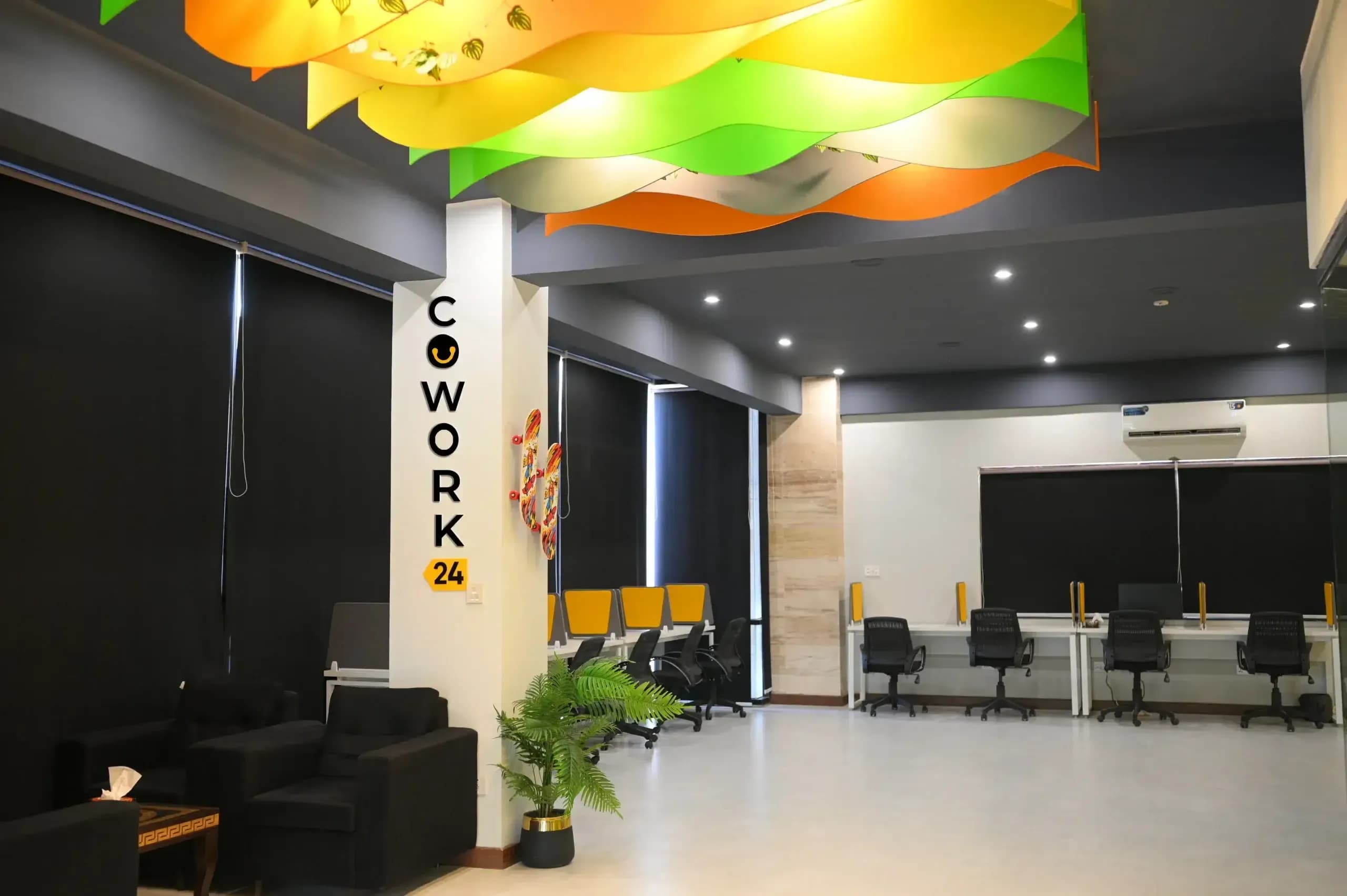
12TH OCT, 2026
Coworking Space vs Serviced Office in Islamabad
Both skip the hassle of running your own office the difference is whether you share the floor or get a room of your own. Here's how to tell which one fits.
Two flexible options, one key difference
The workspace you pick feeds straight into your productivity, your costs, how the team feels, and how easily you can grow. For professionals and companies after flexible office space in Islamabad, two options come up again and again: a coworking space and a serviced office.
Both save you from setting up and running a traditional office, but they're built for different kinds of working. A coworking space is a shared professional floor freelancers, remote workers, founders, and small teams working alongside each other. A serviced office is more private: your own enclosed, managed office for a team that wants separation without the chore of running the whole place. The core difference, really, is just how much of the space is yours alone. This walks through the difference and helps you work out which one suits your work, your team, and where you're heading.
The short version, side by side
The biggest difference between a coworking space and a serviced office is the type of space you get. Coworking gives you a shared, open working floor where individuals and businesses work alongside each other. A serviced office provides your own enclosed room within a professionally managed workplace, allowing your team to work separately from other members.
Who each suits is another important distinction. Coworking is generally better for freelancers, independent professionals, and smaller teams who are comfortable sharing a workspace. Serviced offices are more suitable for teams and businesses that want a dedicated environment for their daily operations.
Privacy and cost usually go together. In coworking, you're surrounded by other professionals, which creates a more open and social atmosphere while keeping costs lower because the space is shared. A serviced office offers greater privacy behind a closed door, but typically costs more because that room is reserved exclusively for your business.
The community and atmosphere are different too. Coworking encourages informal conversations and interaction with professionals from different industries. A serviced office provides a quieter, more independent setting where your team can concentrate and hold internal discussions without the same level of interruption.
When it comes to facilities, both options provide access to shared professional infrastructure and services. Coworking members use the common workspaces and facilities, while serviced-office users benefit from those shared services alongside their own private room.
Neither is the outright winner it comes down to how much privacy you need and how big your team is. The rest of this explains what tips the balance.
What actually decides it
The environment. Coworking is built around a shared floor people from different industries working in the same space, which gives it energy and plenty of chances to cross paths with others. It suits freelancers, remote workers, consultants, founders, and small teams. A serviced office is quieter and more contained: your team gets its own enclosed room while still using the wider space's facilities. If you want that separation, the serviced office is the fit.
Privacy is the sharpest line between them. On an open coworking floor you're working among other members great for connection, less so for confidential calls, sensitive work, or constant internal discussion. If that's a regular part of your day, a serviced office gives you a closed room while still plugging into the shared facilities. The question is simply how much privacy your work needs.
Cost tends to follow privacy. Coworking is lighter on the wallet for individuals and small teams because you're sharing the space and the facilities rather than holding a whole office. A serviced office gives you private space, so it's a different level of spend. Don't judge on the headline price alone, though weigh the full package of furniture, internet, power backup, utilities, maintenance, cleaning, meeting rooms, and management that comes bundled in.
Flexibility and scalability. Both beat a fixed long-term lease, but they serve different moments. A freelancer or founder often starts on coworking because they just need a good place to work. As the team grows and needs more privacy, more seats, or its own room, a serviced office starts to make sense. The nice thing about a provider that offers both is you can move from a desk to a dedicated desk to a private office as you go, rather than relocating each time which is exactly what startups with unpredictable growth want.
Community, facilities, and the day-to-day
Community is where coworking pulls ahead. Because everyone shares the floor, there's more room for informal chats and connections across industries genuinely valuable for freelancers, founders, consultants, and small businesses who'd otherwise be working alone. A serviced office trades some of that away for privacy; by design, there's less casual interaction. Worth being honest with yourself about which you'd rather have.
Facilities are common ground. Both give you access to professional infrastructure without building an office yourself high-speed internet, power backup, proper workspaces, meeting rooms, comfortable surroundings, and shared business facilities. Either way, you spend your time on the work rather than on keeping the office running.
Client meetings work much the same for both. A freelancer in a coworking space doesn't need a permanent boardroom but will occasionally want somewhere professional for a client and a bookable meeting room covers that. A serviced-office team benefits too, pulling in a separate room when their own office isn't right for a bigger presentation or formal meeting. Neither model forces you to keep your own dedicated meeting room.
Office management is the big shared win over a traditional office. Run your own place and you're organizing furniture, internet contracts, utilities, maintenance, cleaning, security, equipment, and all the admin. Both coworking and serviced offices take most of that off you, so your time goes to customers, operations, and growth instead.
What fits you specifically
Individuals. For one person, coworking usually covers everything a professional setting, reliable internet, a comfortable desk, shared facilities, meeting rooms when needed, and other people to cross paths with. Freelancers, consultants, remote employees, and entrepreneurs who don't need a permanent private room tend to find it the more practical choice.
Teams. A serviced office gets more relevant as a team grows. An enclosed room lets colleagues talk freely, hold internal conversations, arrange their own space, and feel like a team rather than scattered members on a shared floor. It suits startups with growing teams, small and mid-sized businesses, corporate teams, agencies, project teams, and companies setting up in Islamabad. That said, a smaller team that likes an open, collaborative vibe might still pick coworking size alone shouldn't decide it.
Startups often begin on coworking: professional infrastructure without taking on a full office, and founders surrounded by other people rather than stuck working from home. As the startup grows, its needs shift more privacy, consistent seating, space to collaborate and that's when a serviced office earns its place, giving a growing business those benefits without the setup burden of a traditional office.
Corporate teams use both. A company doesn't need a whole independent office for a small regional or project team a serviced office gives that team a dedicated base, while coworking covers individual employees, hybrid staff, or people who only need space occasionally. You can match the model to headcount and how often the space actually gets used.
And location matters across all of them it shapes commuting, client access, and daily operations. Cowork24 covers Gulberg Greens, I-10/3, and PWD, so weigh where your team and clients are before you choose; a convenient spot can matter as much as the type of office.
A simple way to decide
Go with coworking if you work independently, freelance or consult, work remotely, are just starting out, prefer a more social setting, don't need a private office every day, and want flexible professional space. It's a real upgrade on working from home without committing to a room of your own.
Go with a serviced office if you have a growing team, need genuine privacy, hold regular internal discussions, want an enclosed professional office, need space for a corporate or project team, want the infrastructure without managing it all, or need a consistent home base for the team. For these, the privacy is worth more than the open-floor buzz.
If you're on the fence, run through a few questions: How many people need space? How private does the work need to be? Do you hold confidential conversations often? Shared floor or your own room? How much does networking matter? Is the team likely to grow? What's the budget? Do you need meeting rooms? Which location is most convenient? And how much office management do you actually want to handle? Answering those honestly points the way far better than the lowest price does.
The bottom line
There's no single winner. Coworking suits professionals and smaller teams who value flexibility, community, and a shared setting. A serviced office suits businesses and teams that need privacy, a dedicated space, and a managed environment. The right pick comes down to your team size, budget, privacy needs, working style, location, and growth plans so the better question isn't "which is best?" but "which one matches how I actually work?"
The good news is you don't have to commit blind. Cowork24 offers both, plus dedicated desks and meeting rooms, across Gulberg Greens, I-10/3, and PWD so you can start with one and shift as your needs change. If you're deciding between them, the quickest way to feel the difference is to visit: walk through the coworking floor and a serviced office, compare the facilities, and pick the setup that fits your work.