6TH OCT, 2026
Best Office Space for Startups in Islamabad
The right office shapes how a startup runs, grows, and comes across and for an early company the trick is finding something professional enough for daily work but flexible enough to keep up as you scale. Here's how to choose one.
Why your first office is a bigger decision than it looks
The office you pick early on quietly affects a lot how smoothly the team works, how you come across to clients and investors, and how easily you can grow. The hard part for an early-stage company is that you need something professional enough to run a business out of, but flexible enough that it doesn't become a problem the moment you hire.
That's why, if you're hunting for startup office space in Islamabad, the monthly rent is the wrong thing to fixate on. Location, how flexible the space is, whether the internet holds, meeting rooms, privacy, access, and room to grow all matter just as much sometimes more. Cowork24 runs flexible workspace across Gulberg Greens, I-10, and PWD aimed squarely at startups, founders, freelancers, and growing teams, so you can match the space to where you are now.
Flexibility first, then the fit
Startups rarely stay one size for long. You might begin with two founders, add a handful of people in a few months, and need a proper office by year's end. That's the whole case for flexibility: start with the space you actually need and adjust as the team changes, instead of paying for empty desks or getting stuck somewhere that's suddenly too small.
Location is the first real decision, because it hits everyone daily. A practical spot cuts the commute for your team and makes it easy for clients, partners, and candidates to visit so weigh accessibility, road links, parking, distance from your clients, and how professional the area feels. Cowork24's three locations let you pick on your team, your business, and your budget rather than settling.
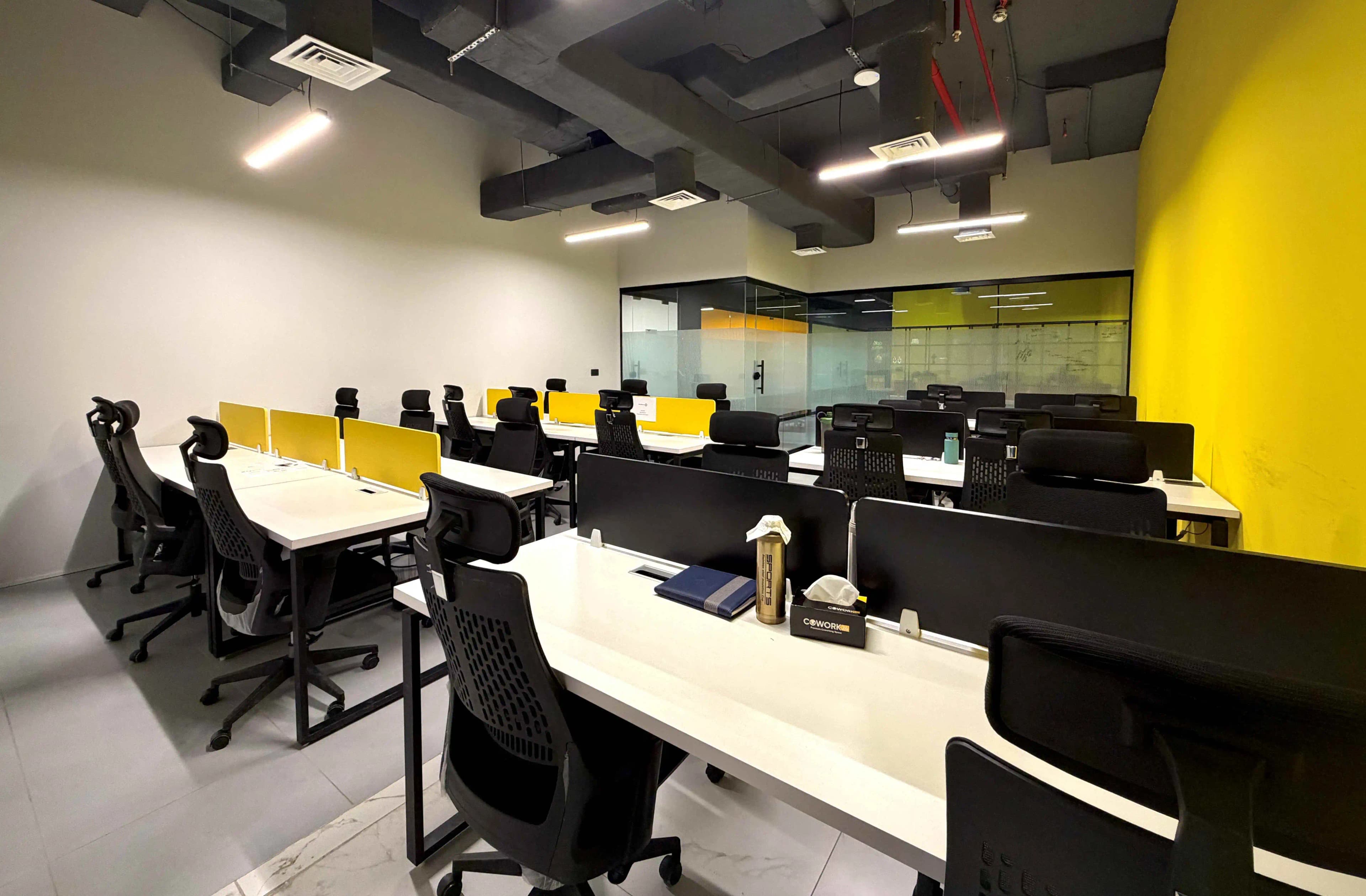
Then it's about what kind of space fits your stage. Not every startup needs four walls from day one. A solo founder or a very small, early team is often perfectly served by coworking a professional desk, the facilities, and none of the overhead. A dedicated desk is the useful step between that and an office: a fixed workstation inside the coworking space, giving founders and small teams consistency without renting a whole room. And a private office makes sense once you're growing, need privacy, hold frequent internal discussions, meet clients regularly, or handle confidential work. The right call comes down to how your team works today and how fast you expect that to change.
The things that can't fail
Internet. Nearly everything a startup does runs on it video calls, cloud tools, development, collaboration, customer systems, marketing, remote comms. A shaky connection doesn't just slow you down; it embarrasses you in the middle of an investor call. Test it properly on your visit; make it the first box you tick.
Power backup. Just as critical, especially given local outages. A power cut mid-meeting or mid-deploy costs you work and credibility. Ask exactly what the backup setup is and whether the place keeps running when the grid doesn't a serious workspace has this handled.
Meeting rooms. Even startups that don't need much office space still need somewhere proper for client meetings, investor pitches, interviews, and planning. On-demand access to a professional room lets you make a strong impression without permanently tying up space for a conference room you'd use twice a week.
Privacy. You'll be dealing with things that shouldn't be overheard client data, financials, product plans, hiring, contracts, strategy. If that's a regular part of your day, factor in a private office or an enclosed meeting space from the start rather than bolting it on later.
Room to scale. Your office shouldn't turn into a crisis every time you hire. Before committing, check that you can add desks, move into a private office, upgrade to a bigger one, book extra meeting space, and change your plan as things shift. A workspace that flexes saves you from relocating every few months.
Cost, image, and community
Look at the total cost, not the rent. Startups watch budgets closely, and comparing monthly rent alone is misleading. A traditional office also means furniture, internet installation, electricity, power backup, cleaning, maintenance, security, equipment, and meeting-room setup a managed coworking or private office often rolls most of that in. Compare what it actually costs to run the space, not the advertised number.
Mind the impression it makes. Your workplace colours how clients, investors, partners, and candidates see you it matters most during investor meetings, client presentations, sales calls, interviews, and partnership talks. You don't need a big traditional office to look credible; a well-run flexible space does the job while keeping you adaptable.
Treat networking as a bonus. Coworking puts you around people from other industries, which can throw off referrals, introductions, the odd collaboration genuinely handy when you're early. Just keep it in proportion: workspace quality, location, and infrastructure should still drive the decision, with the community as a nice extra.
Coworking vs a traditional office, in short. A traditional office gives you full control and customization, but you own every operational headache furniture, internet, utilities, cleaning, maintenance, the rest. A flexible, managed space hands most of that to someone else. For a startup that wants to move fast and skip the setup, that trade is usually worth making.
Tech startups and hybrid teams
If you're a tech startup, the infrastructure matters as much as the office itself. Software teams, developers, and digital agencies lean hard on fast, reliable internet, solid power backup, quiet areas for focused work, flexible access hours, meeting rooms, and space to add people. Get those right and the rest tends to follow; get them wrong and no amount of nice furniture saves the day.
If your team is remote or hybrid, you probably don't need a desk for everyone five days a week. You need a professional space for certain days, team meetings, client sessions, or focused project stretches and paying for a big office that sits half-empty makes no sense. Flexible options fit this far better: use coworking desks, a private office, or just the meeting rooms depending on what a given week actually calls for.
Location, stage, and what to ask
Each Cowork24 spot suits a different kind of startup. Gulberg Greens is the premium, client-facing choice good for more established startups, executives, and growing teams who want a polished setting and host visitors often. I-10 is the practical, well-connected pick, a natural home for IT startups, developers, freelancers, agencies, and growing teams. PWD is the value-focused option for freelancers, early-stage startups, consultants, and smaller teams keeping a close eye on cost.
Your stage points to the workspace type, too. A solo founder usually just needs a coworking desk. A small team does well on dedicated desks regular workstations, still flexible. A growing startup benefits from a private office for privacy and closer collaboration. A larger or expanding team is often best served by a serviced or flexible office that gives you professional space without the burden of running the infrastructure.
And before you sign anywhere, ask the provider the questions that actually matter: What workspace options are there? Can we start with a few desks and expand later? Are private offices available? Is high-speed internet included? Is there power backup? Are meeting rooms available? What are the access hours? Is parking sorted? What's included in the plan and can the space support where we're heading? Then, wherever you can, go see it in person and bring a couple of teammates photos never tell you how a place actually feels to work in.
The bottom line
The best startup office in Islamabad isn't the cheapest one it's the one that keeps you productive, runs on reliable infrastructure, fits your budget, looks professional when it counts, and lets you grow without upending everything. Solo founders and tiny teams usually do fine on coworking or dedicated desks; as you expand, a private or serviced office brings the privacy and room to collaborate. And since location matters too, Cowork24 spreads its options across Gulberg Greens, I-10, and PWD for startups at different stages.
The real goal is a space that works for you today and still fits a year from now. The quickest way to find it is to go and see one book a tour at Cowork24, walk through the coworking areas, desks, private offices, and meeting rooms, and judge for yourself which setup suits how your team actually works.